The Philosophy of Concretion and Abstraction — Volume One: The Foundational Introduction
My Neighbour, Sheikh al-Albānī, and the Watch of Traditional Religious Consciousness
16 October 2026 · Hashem Nassar
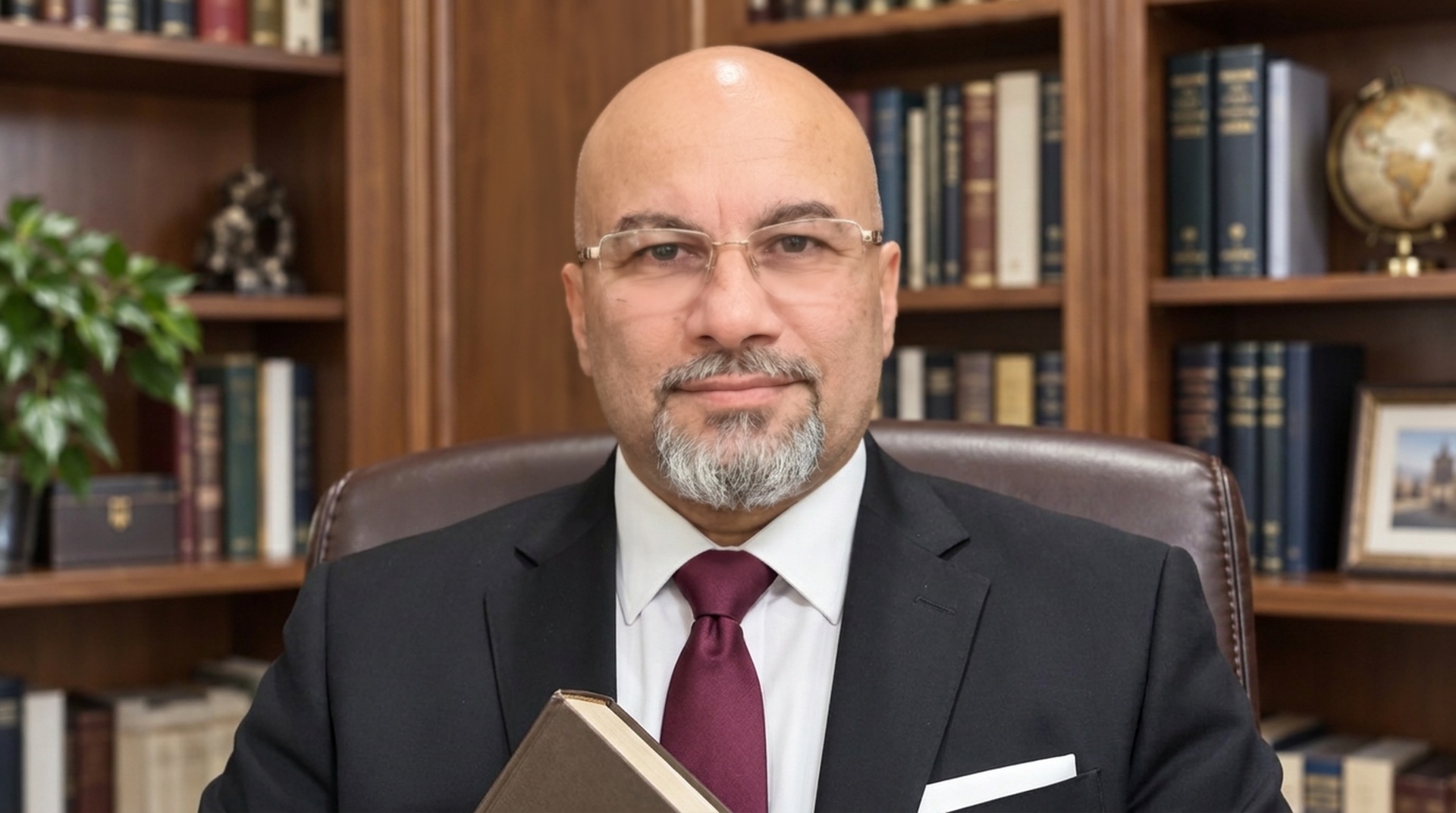
You who search, with your heart, through the folds of meaning: my years as a neighbour of Sheikh al-Albānī, may God have mercy on him, were far more than a matter of living two hundred metres away. They placed me, existentially, at the heart of one of the most important workshops of traditional religious thought in modern times. At that early stage — I was not yet twelve — I found myself entering a very particular field of knowledge. On the surface, information was not treated as absolute truth simply because it was old. It was treated as testimony that needed to be vouched for, as reports that gained legitimacy only through rigorous criticism and a relentless search for their authentic root. In reality, however, the process of inquiry itself was a trap, intricately built to look like a strict instrument for putting texts on trial, while for the most part it served to legitimise them and let them pass. It was a trap that persuaded you that inherited knowledge was raw material subjected to careful examination before it settled in the heart as certain truth.
My real lessons beside al-Albānī were not those he gave in his public lectures. They were silent lessons, in which I watched the workings of the Sheikh’s examining mind — a man who, as it happens, had been a watchmaker by trade. I watched him take apart thousands of reports in order to rebuild the “watch of traditional religious consciousness” from antique parts, discarding every cog, every narrator, whose integrity or accuracy was in doubt. Here I began to grasp how dangerous was the Concretion that had afflicted historical thought: human illusions had piled up and the historical ego had thickened on top of the texts, turning them from abstract lights into material moulds heavy with defects. I believed at first that manuscripts and the study of chains of transmission were the tools that would let us purify our knowledge — freeing the truth from the impurities of Concretion that narrators had attached to it over the centuries. But I discovered that what we were doing was nothing more than passing speculative judgements on chains and texts, and then imposing them on unknowing communities as though they were absolute truths.
Genuine religiosity demands a state of exalted Abstraction, in which we rise above our surging emotions to reach the pure essence that “falsehood cannot approach from before it or from behind it” (Q 41:42). The silence that hung over the long hours of research in the Sheikh’s library would whisper to me: “Do not be a vessel for everything poured into you. Be a filter through which nothing passes but abstract truth.” From there the seeds of the philosophy I offer today took root in my consciousness: a philosophy in which sovereignty belongs to proof alone, and ascent comes only through liberation from the crowd of concretised ideas that have hidden from us the light of God, which runs through the whole dominion of the heavens and the earth. That experience was my spirit’s first exercise in deciphering the codes of existence, far from the din of blind indoctrination.
Hashem Nassar
All rights reserved
All articles