The Philosophy of Concretion and Abstraction — Volume One: The Foundational Introduction
Abstraction and the Shedding of Academic Titles
16 October 2026 · Hashem Nassar
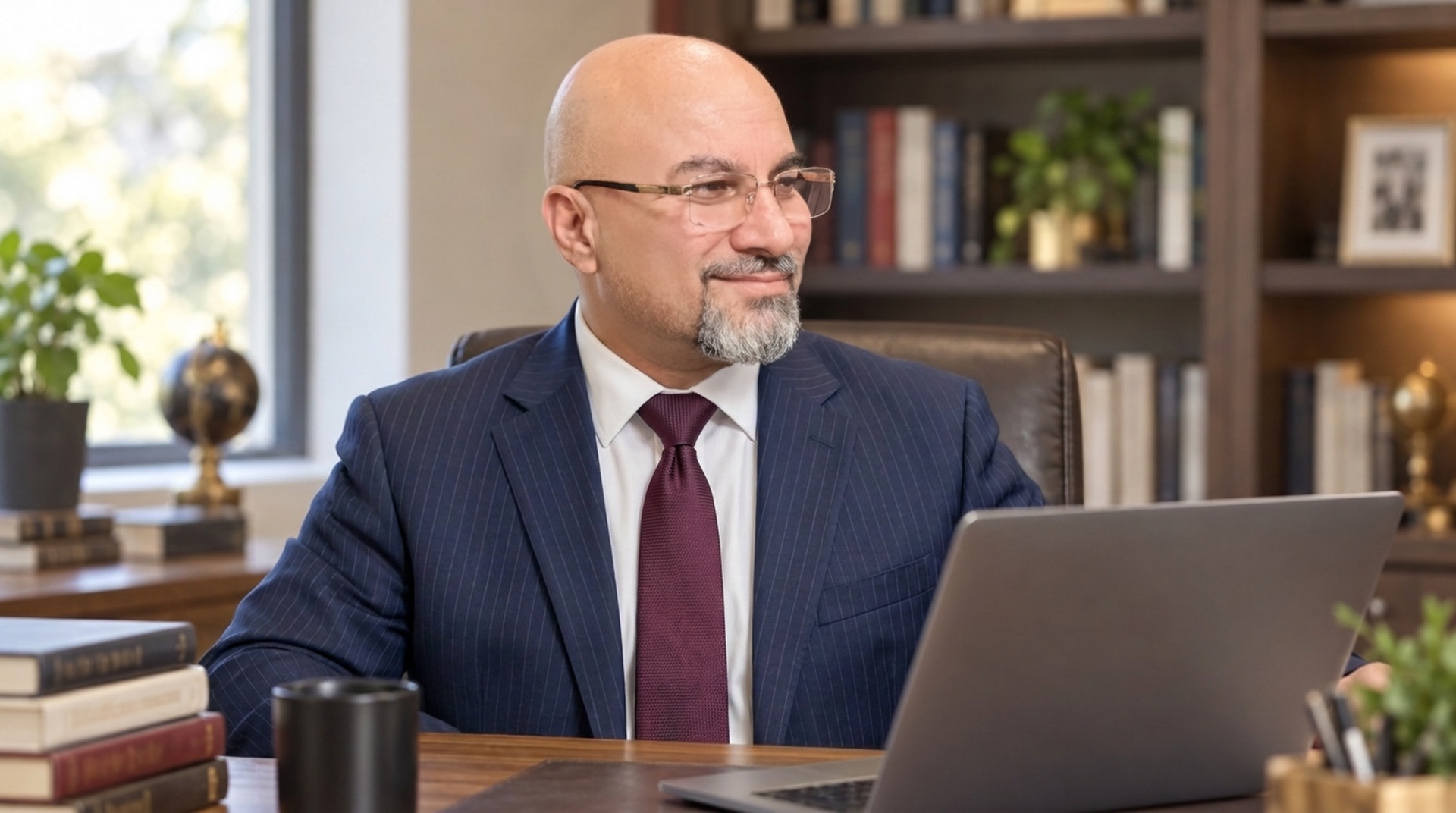
At the outset of this book, before you begin to trace the layers of this philosophy, I owe you a confession — one I must make before I share any of my thought with you. Integrity comes before meaning: no one can see clearly what a speaker says until they know where the speaker stands in relation to his own words. So I stand before you stripped of every title that wraps the Self in pretension and lures it into believing it is something it is not. I am not a “Doctor”, and I do not consider myself worthy of a title that in our time has become a shackle, weighing down the Self and clouding the clarity of its primordial nature. I am Hashem, Abu Rashid: a student adrift on a vast and turbulent sea, looking for a glimmer of light and making no claim to have reached the threshold of truth.
By God’s grace I spent many years on the academic path. I earned my bachelor’s and master’s degrees in public law at Al al-Bayt University in Jordan, graduating first in my class both times. I then earned a doctorate in criminal and administrative law under the supervision of my distinguished teacher and dear brother Dr Mohammad Al-Fawa’reh, with a thesis entitled The Role of Public Authorities in the Legal Characterisation of Crimes Committed by Public Officials: A Comparative Study, which I defended in person before an eminent committee of professors: Dr Ibrahim Al-Samarra’i, Dr Irheim Al-Kubaisi, Dr Amer Al-Dulaimi and Dr Khalid Al-Jubouri. Three years later I earned a second doctorate, in international arbitration, completed online, with a thesis on The Effect of the Rules of the ICSID Convention on the Centre’s Personal Jurisdiction. The Kingdom of Morocco then generously awarded me a scholarship, granted to the top graduate students, to pursue a third degree at Hassan I University in Settat, with a thesis on Fair-Trial Guarantees for the Accused in Political Cases. The Covid pandemic and other obstacles prevented me from defending it. Yet, strangely, I found that I no longer wanted to defend it at all. I had undertaken a deep reckoning with myself, and had come to reconsider the meaning of that pursuit, its purpose and its end.
That reckoning showed me that the race for academic degrees hides a dangerous trap: more often than not, it feeds the Self’s inclination towards pride, the swelling of the ego and an empty sense of superiority. And so, entirely of my own free will, I renounced these qualifications, the doctorate among them, and brought my academic career in Morocco to a close. This renunciation was neither self-punishment nor any disparagement of knowledge, of universities or of my great teachers. It was an honest recognition that if the true standards of judgement were applied — measured on the scales of the cosmos itself — I would stand humbled before the grandeur of knowledge, to the point that even a secondary-school certificate would be more than I deserved.
I therefore claim to be neither a scholar nor a philosopher. That is not a judgement I may pass on myself. If my voice in this book sometimes sounds like that of an accomplished philosopher, this comes from the manner of presentation and the discipline of a systematic structure, not from any personal pretension.
The first-person plural you will meet throughout these inquiries — in their conclusions and in my comments on other thinkers — is never the royal “we”. It is the very opposite: a form of humility. When I say “our philosophy”, “we see”, “we find”, “we conceive”, “we agree”, “we differ”, every one of these phrases springs from a deep acknowledgement that this philosophy is not my invention alone, and does not speak in my name alone. Anyone who studies philosophy knows that its roots lie in the works of the ancients and that its ideas are scattered through the books of those who came after them.
What I offer is the effort of a student who says what he has seen and leaves the judgement of it to those competent to judge, respecting every opinion, criticism or refutation. How truly the words of Imam al-Shāfiʿī, may God have mercy on him, apply to me:
Each time the years have taught me,
they have shown me how little my mind has grown;
and each time my knowledge has increased,
it has taught me more of what I have not known.
The wider the circle of knowledge becomes, the wider grows one’s awareness of one’s own limits; what we do not know looms larger in our eyes in proportion to what we have learned. This is the truth at which I have come to rest. I am a student, however long my search; a seeker, however strong my resolve. I cannot claim for myself what I hold only as a shadow or a supposition, however much I might claim certainty. What I place in your hands is simply my inheritance of learning, striving and knowledge. I could not bear to let it die with me and then be asked about it. Perhaps it holds a spark of light that may brighten the darkness for someone on the road to truth.
I have long asked every reader, student and friend not to call me “Doctor”. I previously published two books in law: Crimes Involving Moral Turpitude and Their Effect on Public Office (2016) and The Role of Public Authorities in the Legal Characterisation of Crimes Committed by Public Officials (2018), both issued by the Academic Book Centre in Jordan. I apologise for every publication, announcement and interview that has carried that title. This renunciation does not mean that I have stopped searching, nor that I set learning aside. It is a declaration that strips away the false husks from consciousness and closes a gap through which Satan slips in to inflate the Self with pride and vanity — God protect us from that. So let us begin this journey of knowledge together, lightened of the weight of clay and joined to the light of God Almighty.
Hashem Nassar
All rights reserved
All articles